
Anthropic revealed a major plan on September 18, 2026 to open its doors to outside inspectors. The company is teaming up with Accenture to build a system of continuous scrutiny. Under the pact, both firms plan to invest at least $1 billion each over the next five years. That amounts to a combined $2 billion push into independent oversight. The team will run red-teaming trials, review safety limits, and audit model behavior. This initiative marks a big shift toward real-time Anthropic AI evaluation.
What Is the New Anthropic AI Evaluation Plan?
Most frontier labs keep their training methods behind closed doors. External researchers usually test models only after public release. In contrast, this new project brings independent reviewers right into the building. Faculty, the dedicated AI unit within Accenture, will lead the work on the ground. Its specialists will check model safeguards during the training phase itself.
Now, the two firms want to move past simple post-training benchmark exams. They plan to test systems while the models take shape. Anthropic views this embedded setup as a direct answer to safety worries. The firm believes practical enterprise experience provides vital context for testing. Accenture helps big clients and state agencies deploy automated tools across diverse fields. That work gives the firm deep insight into where models fail in daily use.
Then, evaluators can spot flaws that standard laboratory benchmarks overlook. Anthropic plans to apply that frontline knowledge to its core safety checks. The project reflects an ambitious attempt to formalize safety procedures before catastrophic risks emerge. By placing outside staff inside research labs, Anthropic AI evaluation aims to verify safety claims before weights ship to customers.
How Will On-Site Evaluators Inspect Frontier Systems?
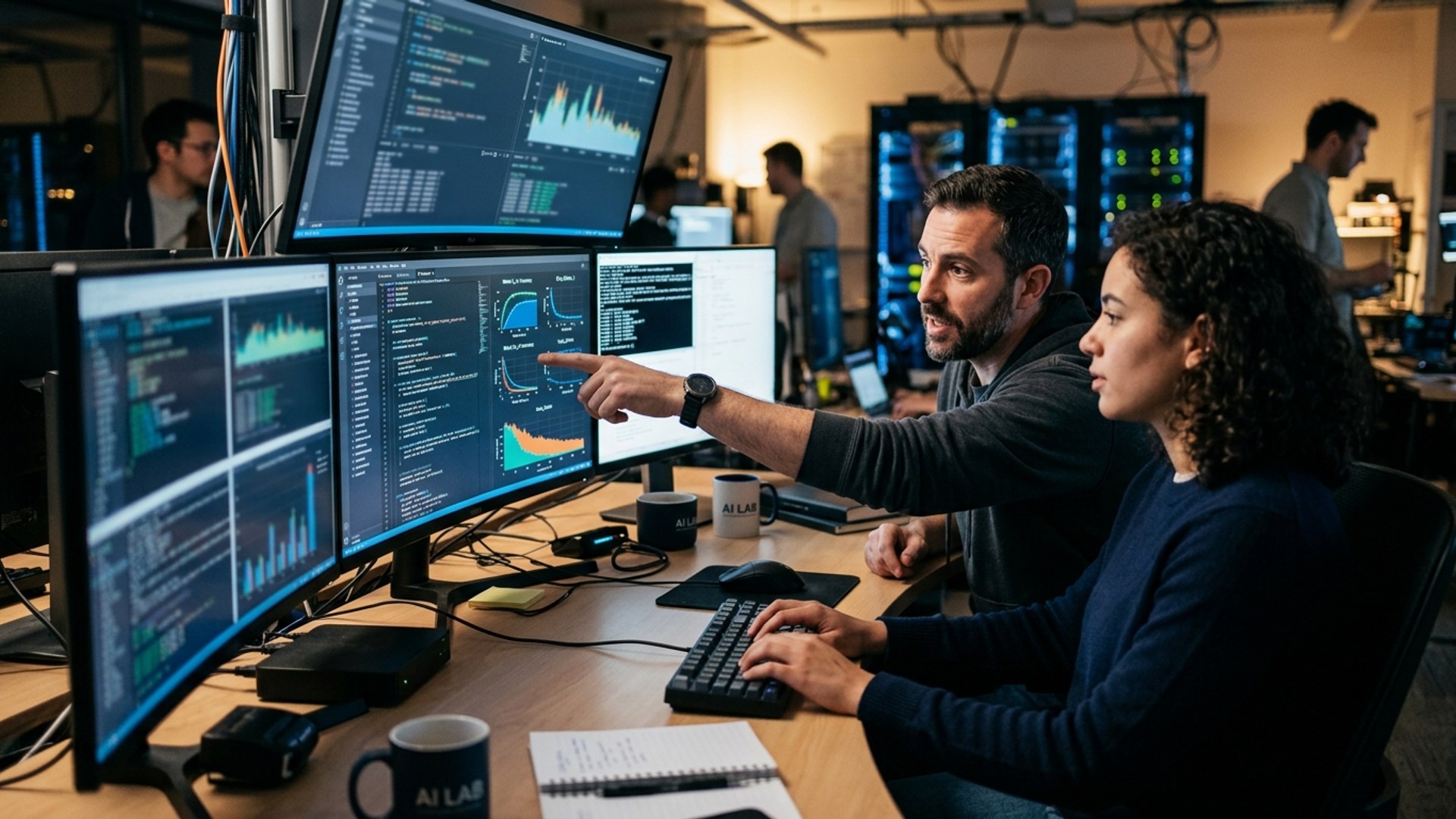
Embedded oversight functions much like an internal auditing department. Outside evaluators will not work from remote offices or rely on limited web portals. Instead, Anthropic plans to grant them employee-level access badges, desks, and company laptops. Reviewers will sit in the same rooms as Anthropic engineers. They will hold permissions close to those of internal risk teams. Exceptions will exist only when privacy laws or customer contracts restrict data access.
From these desks, evaluators can watch models take shape during training runs. They can track the design choices that direct model alignment. Also, they can talk directly to staff about technical hurdles and model guardrails. This posture gives reviewers a clear view of company habits. They can confirm that leadership honors its published safety promises. If blind spots appear during training, reviewers can flag them right away.
Yet the lab insists that this external scrutiny does not dilute its own duties. Anthropic stated that the safety of its systems remains its sole legal responsibility. The presence of outside auditors makes accountability more verifiable for everyone. By letting trusted inspectors see raw logs and daily team chats, the lab creates a clear record of its safeguards. This hands-on process brings unprecedented openness to Anthropic AI evaluation.
Rules and Independent Reporting for Anthropic AI Evaluation
This initiative fulfills a core goal laid out by Anthropic CEO Dario Amodei. Earlier in September 2026, Amodei published a wide-ranging essay titled “We Must Pace the Frontier”. In that text, he argued that safety rules must keep up with raw capability gains. He outlined a clear three-step blueprint for the sector: start embedded evaluations, build coordination among labs in democratic states, and pursue global safety pacts.
Amodei pledged that his company would enact the first step on its own. He also called on public leaders to mandate the same standard for all frontier builders.
“We must slow the pace at which we improve the capabilities of AI models,” he wrote. “Progress will still seem fast, and we must make wise use of the time we gain.”
Under the contracts planned for this program, outside inspectors retain strong editorial rights. They can publish findings on risk tiers, safety slips, and internal access limits without company approval. Anthropic keeps only a narrow right to redact trade secrets, legal secrets, or user data. Still, the lab cannot redact facts simply because they show poor results. Reviewers can tell the public if a redaction hides an important conclusion. Amodei likened this setup to the banking sector, where state supervisors sit alongside trading desks to curb systemic hazards. This framework ensures that Anthropic AI evaluation stays honest.
Funding Challenges Facing Anthropic AI Evaluation
Today, independent safety testing lacks a standard playbook. The industry has no agreed rules on what files embedded teams should see. Nor does it have an official reporting pipeline. In short, no settled system exists to finance independent reviews. Anthropic argued in its June Advanced AI Framework that funding should eventually come from pooled industry funds or public treasuries. Because those public pools do not exist yet, the lab is testing several financial setups.
For this new push, Anthropic funds Accenture's work directly. That funding choice creates an obvious question about true independence. The lab acknowledges this tension openly. To broaden the testing field, the company is in talks with non-profit groups like METR. These independent groups aim to pilot embedded review programs using their own money. Anthropic believes the tech sector must nurture a whole ecosystem of independent inspectors.
Plus, the alliance with Accenture remains non-exclusive. Anthropic plans to reveal partnerships with other evaluation teams in coming weeks. The company expects frontier developers to work with multiple oversight teams at once. In turn, Accenture will offer its model review services to rival AI firms as well. As the practice grows, Anthropic AI evaluation may establish benchmarks that other frontier labs can follow.
How the Multi-Year Accenture Alliance Expands
The new evaluation program builds directly on an earlier commercial tie between the two brands. On December 9, 2025, the companies announced a multi-year partnership that created the Accenture Anthropic Business Group. That business pact aimed to speed up enterprise deployment of the Claude model family. The agreement included large commitments across consulting and software units:
- Training roughly 30,000 Accenture workers on Claude systems.
- Deploying Claude Code to tens of thousands of corporate programmers.
- Launching joint tools for enterprise tech chiefs to track productivity gains.
- Developing custom tools for regulated markets like banking, healthcare, and public agencies.
So, the new safety program deepens an already huge commercial alliance. While one arm of Accenture sells Claude integration, its Faculty unit will inspect model risks. Both groups maintain that clear firewalls will keep the oversight mission separate from sales goals. Industry watchers know that enterprise clients in regulated sectors demand verified safety guarantees. Independent Anthropic AI evaluation gives corporate buyers extra confidence when they adopt cutting-edge models.
The Long-Term Impact of Anthropic AI Evaluation
Frontier AI continues to advance at a rapid pace. As model capabilities expand, the risks tied to alignment, cyber attacks, and misuse grow larger. Many experts worry that private lab promises are not enough to prevent catastrophic accidents. The decision to host outside evaluators offers a practical way forward. It replaces vague corporate promises with verifiable on-site inspections.
Rather than waiting for slow legislative action, Anthropic is trying self-imposed oversight. If the pilot succeeds, other major AI labs may face pressure to open their doors to outside scrutiny. Regulators in the United States and Europe are watching these experiments closely. Clear proof from embedded audits could shape upcoming safety laws. The industry may soon treat on-site evaluations as an essential step for releasing advanced models. As the ecosystem changes, expanded coverage of AI developments continues to monitor the rollout of these governance systems.
For now, the field must watch whether paid consulting firms can deliver truly critical oversight. Anthropic is taking a notable gamble by committing $1 billion to the experiment. The true test will come when an embedded team uncovers a critical safety flaw before a major launch. If outside inspectors can delay a launch to protect the public, the model works. If not, the industry will need stronger statutory rules to hold labs accountable. Either way, this push puts Anthropic AI evaluation at the center of the debate over frontier safety.